AI Is Part of Society. It’s a Lesson from an Olive Grove.
Last fall I sat in a group of old men in an olive mill in eastern Sicily. I watched a machine do in forty-one minutes what they once needed eight hours to finish. Three people now took the harvest from the surrounding olive farms to press the olives. The owner’s son ran the control panel. The farmers sat in plastic chairs and checked their cell phones as they watched and waited.
I wondered why they were still there. The machine plainly didn’t need them.
They were tending their crop not the machine. This machine doesn’t know the olives. It can’t tell if this year’s crop came in exactly right. The whirling machine presses what it was fed. Good or bad it worked on it, certifying nothing. The men were there to do the one thing the equipment couldn’t: to judge. They had welcomed the machine that freed them from hard labor, but they had refused to let it replace what they knew. Technology serves expertise. The moment that reverses, you’ve lost.
I spent my career in finance, though I worked in fields as a child. I went to Sicily with my wife for a culinary adventure, the olive oil, and stayed for the lesson. I was learning the answer to a question that was becoming central to our AI discussions. In an economy where a machine can learn to think and sell it back to us, what exactly is a person for?
Satya Nadella got to the nut of the issue. He warned against a future in which “a few models” capture the value of AI and “eat everything they see.” Human capital does not depreciate with the rise in machine capability. Machines can enhance human value. AI is not just a tool for cutting headcount. “No, how about we think about reorganizing the jobs?” he said, criticizing executives who see AI mainly as a way to cut costs. The industry must earn “societal permission” to develop, Nadella said, adding that the political economy will not tolerate an AI future that hollows out whole industries, indeed societies.
To this I would add what the olive farmers have known for centuries.
The lesson at the mill is smaller and more durable than any board meeting. It is about the person. The son at the control panel was essential to the process, not eliminated by the machine. His job was reorganized, exactly as Nadella prescribes. He shifted from pressing the olives to certifying the quality of the work, which is not a tragedy. That is a promotion, and you could see it in the pride he took in his job.
AI has arrived and many sense danger in its concentration, just what Nadella warns about. When all the capability lives inside a handful of general-purpose models, the farmer loses the ability to choose. He is handed the whole apparatus when what he needed was one good tool. Sustained AI value flows out to the edges, to the small producer in the province of Siracusa and the small business in Toledo. To individuals and not only the few firms large enough to need these machines.
How is that “societal permission” actually earned? Not by relentless lectures from technical specialists. The permission gets justified the way the mill does it. It keeps a human at the center of the thing that matters.
A small olive-oil company in Bronte, Sicily, thought this through in real time. They run their customer relationships on WhatsApp and the telephone because they believe in talking to people. When my wife asked what they wanted from AI that was clearly coming their way, they didn’t ask it to replace anyone. They wanted help forecasting the harvest and clearing customs paperwork. They sought to spend more time with their customers, not less. That is not a compromise with technology. It is wisdom about it. They will be among the last people displaced by anything because they made the one distinction that protects a working life. They chose which tool serves their goals and rejected anything that quietly takes it over.
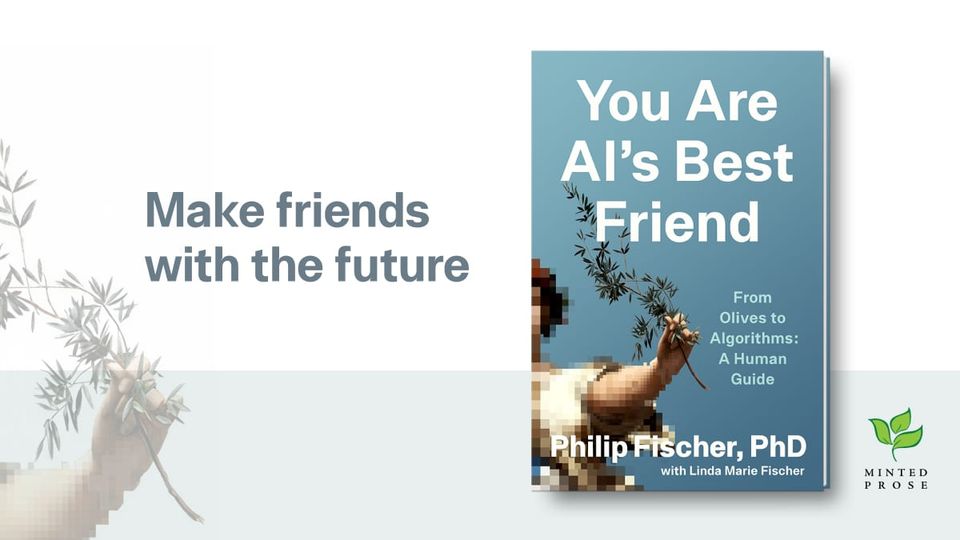
This is the argument of a book I have just published. Others can arrive at the same conclusion from the data center as Nadella shows rather than the olive grove as I did. The convergence keeps happening because the humanist use of AI is not a soft reading. It is the one society will accept.
Near the end of my reporting, we asked an interviewee, Greg Bornstein, what happens to our jobs in five years. He had never seen my book and had never heard a word about olives. He thought about it for a moment.
“We all become farmers,” he said.
He is right, too. A farmer does not serve his tools. He chooses them, tends what works, prunes what doesn’t, and keeps his judgment to himself. That is the whole of it. You are AI’s best friend. AI serves you, not the other way around. The olive trees have outlasted every invader the island ever saw. Tend yours, and your work. The lessons are all around us.
Philip Fischer, a former Wall Street managing director, is the author of You Are AI’s Best Friend—From Olives to Algorithms: A Human Guide (Minted Prose, 2026).